
Ever moved to a new city and immediately noticed changes with your hair?
The water we use to cook, drink, bathe, and shampoo and style our hair with is not the same everywhere we go. While all of these activities utilize freshwater, freshwater has its own distinctions depending on where its coming from. An important distinction when it comes to water and your hair is whether the water is hard or soft.
Water hardness is measured by how much calcium and magnesium is dissolved in it. “Harder” water has more calcium and magnesium, while softer water has less. The United States Geological Survey (USGS) is responsible for tracking where hard and soft water exist in the United States.
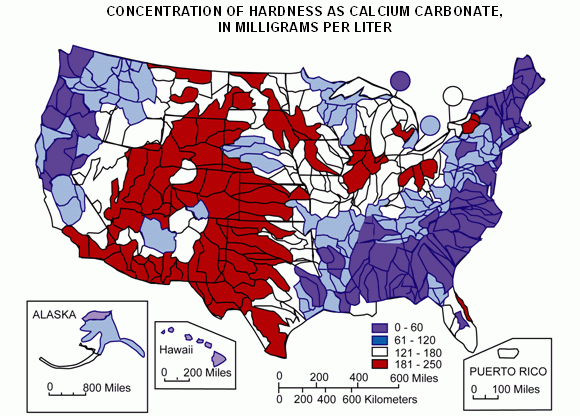
via United States Geological Survey (USGS)
If you live in
Indianapolis, IN
Las Vegas, NV
Minneapolis, MN
Phoenix, AZ
San Antonio, TX
Austin, TX
Tampa, FL
Chicago, IL
Los Angeles, CA
then you are dealing with hardwater.
You can see and feel water hardness, such as soap scum forming on your bathtub or streaks on your dishes after washing them. If you are cleaning your bathroom, dishes, clothing, or hair with hardwater, you’ll need more soap, detergent, or shampoo to get the job done.
How do I manage my hair with hardwater?
Hard water can contribute to
dry hair and scalp
breakage
dull hair
frizzy hair
frequent tangles
If you look at the map above and find yourself in one of the red zones or cities, no need to fear. Hardwater is not hazardous, just an inconvenience that requires a little extra care. If you are managing your hair and suspect hardwater may be negatively impacting your routine, there are solutions:
Water softeners → purify your water before it reaches your hair with a water softener shower head
Clarifying shampoos → remove mineral buildup with a shampoo designed for hard water regions (see here for a list!)
Acidic rinse → Use citrus or apple cider to neutralize the minerals from hardwater, similar to rinsing a coffee pot with vinegar to remove buildup